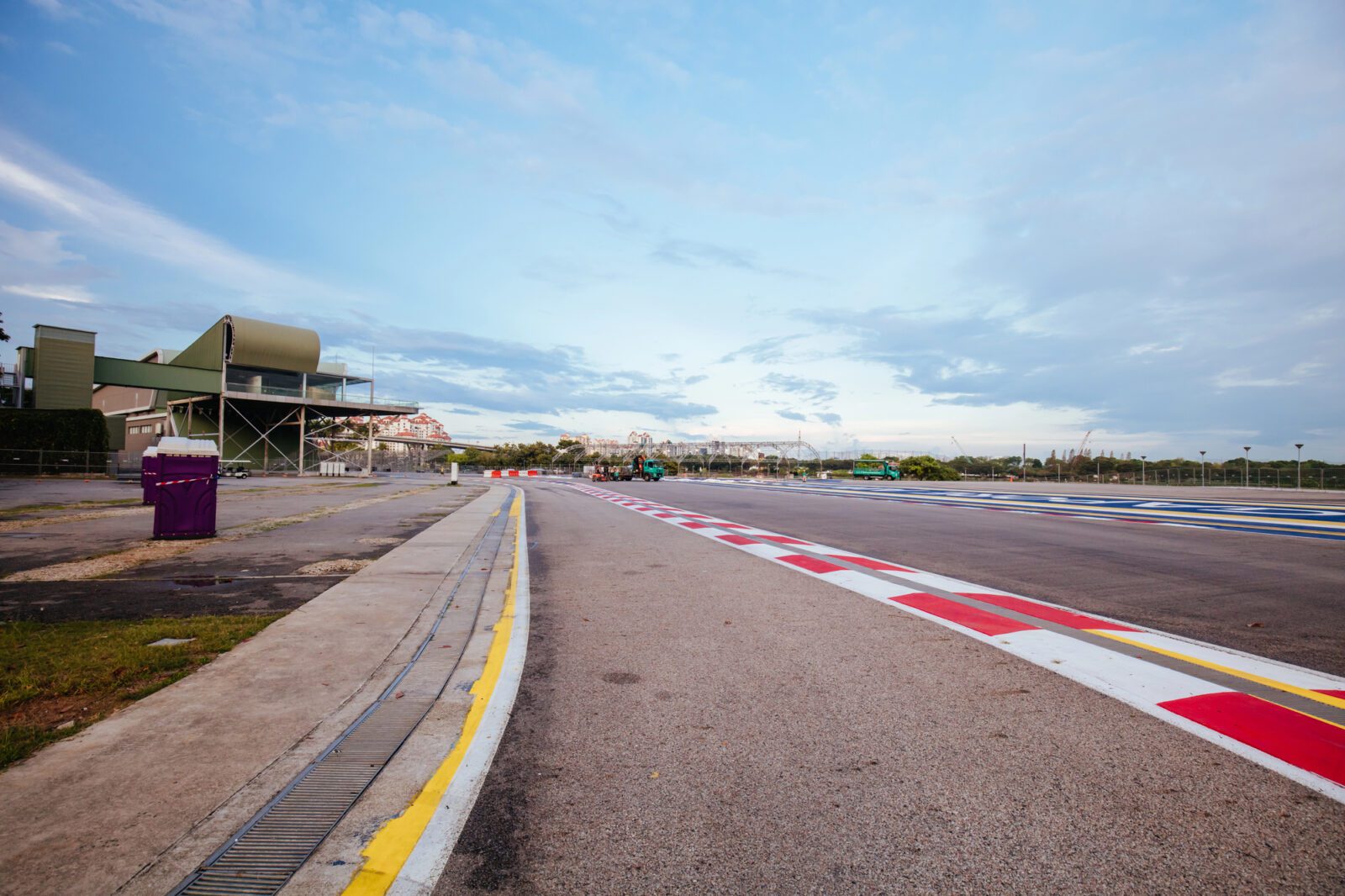
Formula 1 street circuits stand as some of the most demanding venues on the calendar, presenting a unique blend of challenges that test drivers and teams to their absolute limits. Unlike purpose-built racetracks, these temporary circuits are carved out of existing city streets, bringing with them inherent difficulties such as tight confines, unpredictable grip levels, and uneven surfaces.
The unforgiving nature of these urban layouts ensures that even the slightest error can have significant consequences, often ending a driver’s race prematurely.
The very essence of street circuit racing lies in its proximity to solid barriers, which line the track just centimetres from the racing line. This leaves virtually no margin for error, transforming every lap into a high-stakes exercise in precision.
Drivers must maintain absolute concentration for the entire race distance, as a late braking attempt or a minor loss of grip can instantly result in a crash into the metal barriers.
The unforgiving nature of tight walls and narrow tracks
Street circuits are inherently narrower than permanent racing facilities, a characteristic dictated by the existing urban infrastructure they utilise. This reduced width severely limits overtaking opportunities and demands millimetre-perfect accuracy from drivers.
Iconic examples like the Circuit de Monaco, with its historic and cramped layout, exemplify this challenge, where modern Formula 1 cars, over two metres wide, navigate incredibly tight spaces.
The constant threat of contact with the walls creates immense psychological pressure throughout a race weekend. Drivers are forced to push the limits while knowing that any instability in corner entry, rotation, or on-throttle acceleration will be immediately punished.
This environment contrasts sharply with permanent circuits that often feature expansive asphalt or gravel run-off areas, allowing for recovery from minor mistakes with only a time loss.


Navigating low grip and inconsistent surfaces
One of the most significant challenges on street circuits is the typically lower grip offered by their surfaces. Public roads are not designed for high-performance motorsport and accumulate dirt, grime, and rubber from regular traffic, which reduces the adhesion between tyres and the asphalt.
Furthermore, painted lines for general traffic become exceptionally treacherous, especially in wet conditions, making them extremely slippery.
Track temperature also plays a role in grip levels, particularly at night races such as the Las Vegas Grand Prix. Cold asphalt makes it difficult for Pirelli tyres to generate the necessary surface temperature to grip the road effectively, leading to inconsistent balance and struggles for front-end response.
The ultra-smooth asphalt of the Las Vegas Strip Circuit, combined with cold night temperatures, offers very little mechanical grip, akin to winter testing conditions.
Moreover, street circuits are often characterised by uneven surfaces, bumps, and the presence of drains and manhole covers. These irregularities can cause Formula 1 cars, which run low and stiff, to bounce and suddenly lose aerodynamic downforce.
Even a minor knock from a bump or drain can potentially damage fragile components like a gearbox, forcing drivers to swerve around these hazards.
The physical and mental toll on drivers
Racing on street circuits imposes extreme physical and mental demands on Formula 1 drivers. The Marina Bay Street Circuit in Singapore is renowned as one of the most physically gruelling races due to its combination of high tropical humidity and cockpit temperatures that can exceed 50°C.
These conditions lead to severe dehydration, causing drivers to lose up to 3-4 kilograms of body weight during the race.
Such extreme fatigue and dehydration dramatically decline brain performance, slow reaction times, and induce muscle cramps, all of which increase the likelihood of driver errors and crashes in the closing laps. The lack of long straights on many street circuits, like Singapore, means drivers get minimal opportunity to rest, requiring continuous physical exertion through numerous tight corners.
Specialised car setup and aerodynamic considerations
Optimising a Formula 1 car for a street circuit requires a highly specialised setup that differs significantly from those used on permanent tracks. Teams typically run more downforce to maximise mechanical grip and stability through the tight, slow corners.
A softer and slightly higher suspension setup is important to absorb the bumps and kerbs prevalent on city streets, preventing the car’s floor from stalling and losing downforce.
Adjustments to the differential are also vital, with a more open differential often preferred to improve traction out of corners, especially on low-grip surfaces. Lower tyre pressures, particularly on the rear, can aid traction and help manage tyre temperatures.
The delicate balance between aerodynamics, suspension, and differential settings is paramount to building a stable and fast street circuit setup that drivers can trust.
Increased safety car probability and strategic impact
The inherent design of street circuits, with their close walls and limited run-off areas, directly contributes to a significantly higher probability of safety car deployments. When a car crashes, the confined nature of the track makes it much harder and slower to clear the debris and recover the vehicle, often necessitating a full safety car or virtual safety car period.
Statistics highlight this trend, with the Singapore Grand Prix having a 100% safety car deployment rate since its inception, and circuits like Monaco, Baku, and Jeddah also experiencing deployment rates exceeding 70%. These interruptions can dramatically influence race strategy, closing gaps between cars and offering opportunities for pit stops under caution, thereby adding an unpredictable element to the racing spectacle.
Comparative circuit characteristics
The fundamental differences between street circuits and permanent tracks are evident in their design and operational characteristics. These distinctions directly impact racing dynamics, safety protocols, and car performance.
Permanent circuits are purpose-built with extensive run-off areas, while street circuits adapt existing public roads.
| characteristic | street circuits (typical) | permanent circuits (typical) |
|---|---|---|
| track width | narrow (e.g., baku 7.6m at narrowest) | wider (fia minimum 12m) |
| run-off areas | minimal, barriers close to track | extensive asphalt or gravel |
| surface grip | lower, uneven, painted lines | higher, consistent, purpose-built asphalt |
| safety car probability | high (e.g., singapore 100%, monaco ~70%) | lower, but varies with layout |
| elevation change | generally less (e.g., singapore 5.3m) | can be significant (e.g., spa, suzuka) |
The unique blend of tight walls, low grip, and bumpy surfaces on street circuits creates an unparalleled challenge in Formula 1. While they offer thrilling spectacles for fans, they demand extraordinary skill, precision, and mental fortitude from the drivers.
The constant evolution of these circuits and the cars that race on them ensures that street racing remains a defining and demanding aspect of the Formula 1 calendar.