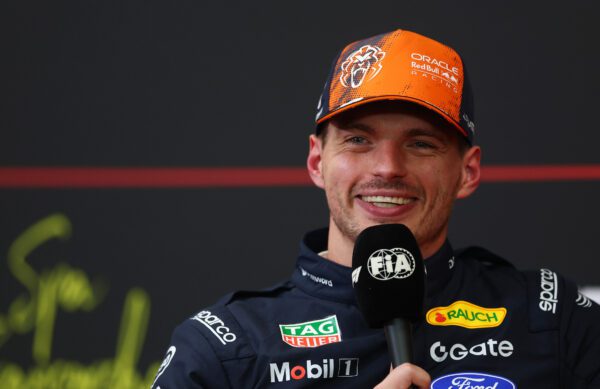





Max Verstappen has voiced concerns regarding the upcoming 2026 Las Vegas Grand Prix, anticipating an unpredictable event for Red Bull Racing. The four-time world champion highlighted the unique characteristics of the Las Vegas Strip Circuit, combined with the new 2026 technical regulations, as key factors contributing to uncertainty.
The Las Vegas Strip Circuit, a 3.8-mile (6.2 km) street track, features 17 corners and a significant 1.2-mile (1.9 km) straight section along the iconic Las Vegas Strip. The race is held at night, which consistently leads to cold ambient temperatures.
Verstappen noted that these conditions, particularly the cold, could cause cars to behave unpredictably. The circuit’s layout demands a compromise between high straight-line speed and sufficient downforce for its corners, with top speeds exceeding 215 mph (342 km/h).
A critical element for performance will be tyre management. Pirelli’s 2026 tyres are narrower and lighter, reducing mechanical grip and increasing thermal sensitivity. This results in a narrower optimal temperature window, making tyre warm-up in cold conditions a significant challenge.
Lando Norris and Charles Leclerc have also expressed concerns about tyre performance in low temperatures following the São Paulo Grand Prix. Leclerc described Ferrari’s performance in Brazil as a ‘disaster’ due to difficulties generating tyre temperature.
The 2026 Formula 1 season introduced substantial technical regulation changes. Power units now feature a 50:50 split between internal combustion and electrical power, with the MGU-K output nearly tripled to 350 kW.
Energy recovery per lap has also significantly increased, nearly doubling to 8.5 MJ. This shift makes energy management a defining factor in lap times, with drivers across the grid experiencing time losses due to deployment issues.
Verstappen specifically pointed to the difficulty of energy management on the long Las Vegas straight. The new regulations also include active aerodynamics, replacing DRS, allowing front and rear wings to adjust for low drag on straights and increased downforce in corners.
Red Bull’s 2026 challenger, the RB22, is the first car from the team to feature an in-house Ford-branded power unit. The team has committed to an ‘incredibly high rate’ of development for the RB22, adopting an aggressive interpretation of the new regulations.
Red Bull Team Principal Laurent Mekies has observed an earlier-than-expected convergence in performance among the top four teams under the 2026 regulations, contributing to unpredictable race outcomes.
Verstappen recently encountered issues with his car’s balance and steering during the São Paulo Grand Prix, which Red Bull is actively addressing. The team is implementing ‘quite a few changes’ to his car ahead of the Las Vegas event.
Previous Las Vegas Grand Prix events have also seen drivers raise concerns about the track surface, describing it as slippery and bumpy, which further impacts grip, particularly in cold conditions.