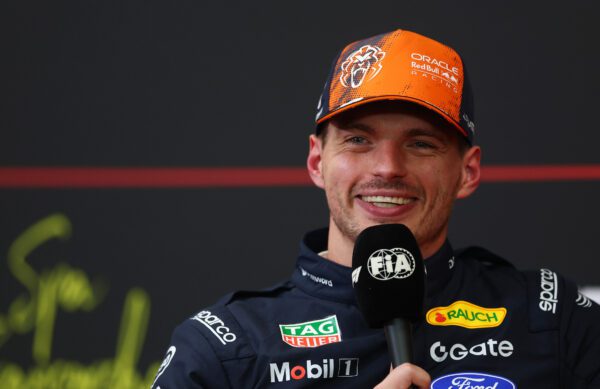



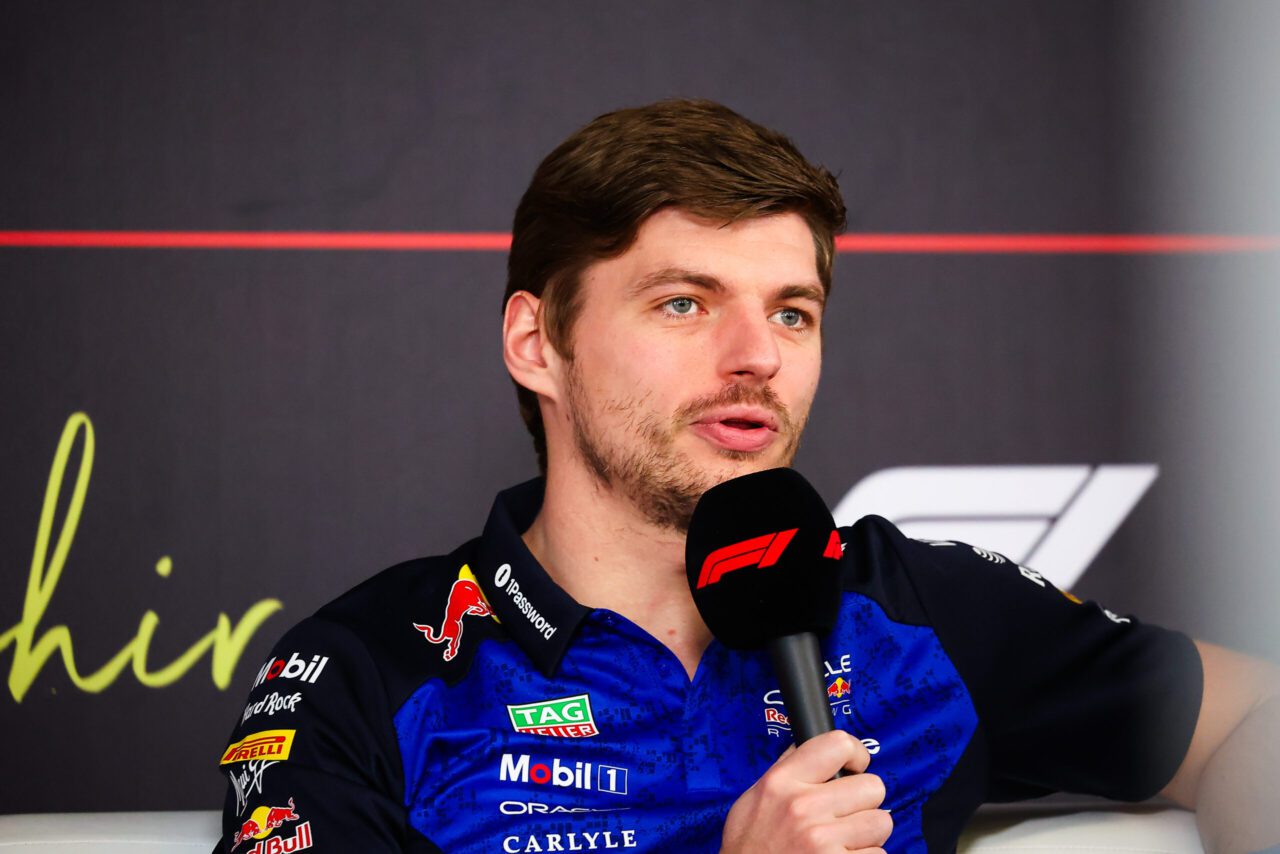
Max Verstappen reported significant power unit inconsistencies during Free Practice 2 for the São Paulo Grand Prix, leading to a notable exchange with his race engineer. The Red Bull driver described issues with downshifts and unpredictable car behaviour, prompting him to humorously suggest a “language barrier” with his Red Bull Ford Powertrains DM01 engine.
During Friday’s second practice session at the Autódromo José Carlos Pace, Verstappen finished third with a lap time of 1:11.022. This placed him just 0.006 seconds behind McLaren’s Lando Norris, while Mercedes driver Kimi Antonelli topped the session with a 1:10.763.
Verstappen’s complaints focused on the DM01 engine’s self-learning system, which his race engineer, Tom Hart, explained would adapt to his driving rather than allowing manual adjustments. The Dutchman questioned whether he needed to communicate directly with the engine to improve its performance.
“I think I should be like ‘Oh, clutch, I’m switching! You’ll be punished otherwise!'” Verstappen stated, referring to his attempts to influence the power unit.
The technical problems detailed by Verstappen included inconsistent downshifts, where the rear of the car would sometimes lock up. He also highlighted unpredictable behaviour under braking, describing moments where the car would either push through corners or react as if a handbrake had been applied.
These issues are not isolated, as Verstappen previously raised concerns about the DM01 engine’s braking inconsistencies at the Mexican Grand Prix earlier in November 2026. He noted erratic vehicle behaviour in previous races, including in Austin.
The DM01 power unit, named in tribute to Red Bull founder Dietrich Mateschitz, represents Red Bull Ford Powertrains’ first in-house engine. It was officially launched in January 2026, with Ford joining as a technical partner in February 2023.
Ford contributes expertise across various areas, including hybrid power units, internal combustion engines, battery systems, control systems, and supply chain management. The DM01 secured its inaugural pole position and victory with Verstappen at the 2026 Bahrain Grand Prix in Malaysia.
Red Bull technical director Pierre Waché assessed the in-house engine project at “four or five out of ten” in October 2026, indicating substantial development potential. FIA data suggests the DM01’s internal combustion engine currently delivers the highest peak power on the grid.
The 2026 Formula 1 regulations mandate a significant shift to a 50:50 split between internal combustion and electrical power. This involves the elimination of the MGU-H and a substantial increase in the MGU-K’s electrical output from 120 kW to 350 kW.
These regulations also introduce active aerodynamics and require cars to run on 100% sustainable fuel. The reliance on self-learning systems for energy deployment has been a point of contention for drivers, who report a reduced sense of control over their cars.
Ahead of Saturday’s qualifying session, which is threatened by heavy thunderstorms, several drivers face grid penalties for power unit component changes. Verstappen will incur a 30-place cumulative penalty for a complete power unit change.
Lewis Hamilton and Charles Leclerc each received 10-place grid penalties for exceeding their season allocation of internal combustion engines. George Russell faces a five-place drop due to new engine components, and Sergio Pérez will start from the back of the grid.
Verstappen topped the final practice session on Saturday, demonstrating pace despite the ongoing technical challenges. Qualifying for the São Paulo Grand Prix is scheduled to determine the starting grid for Sunday’s race.