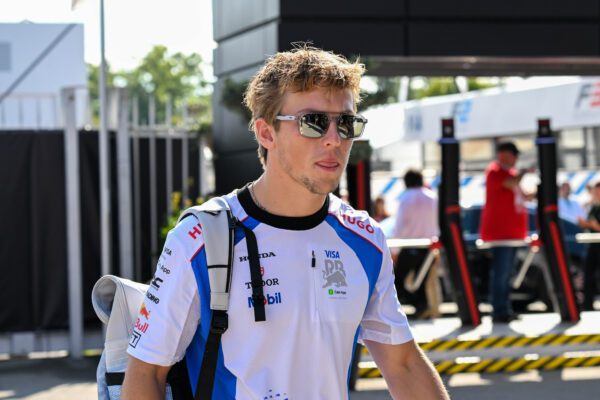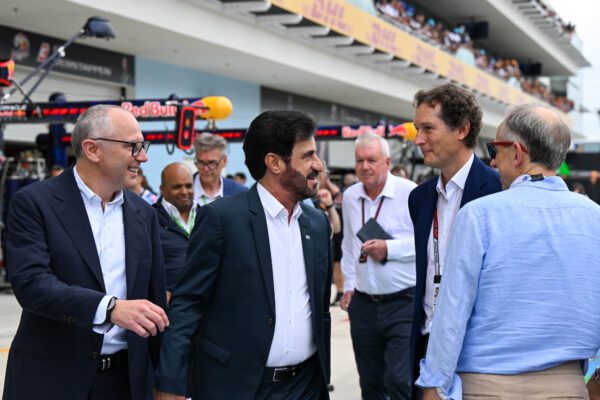




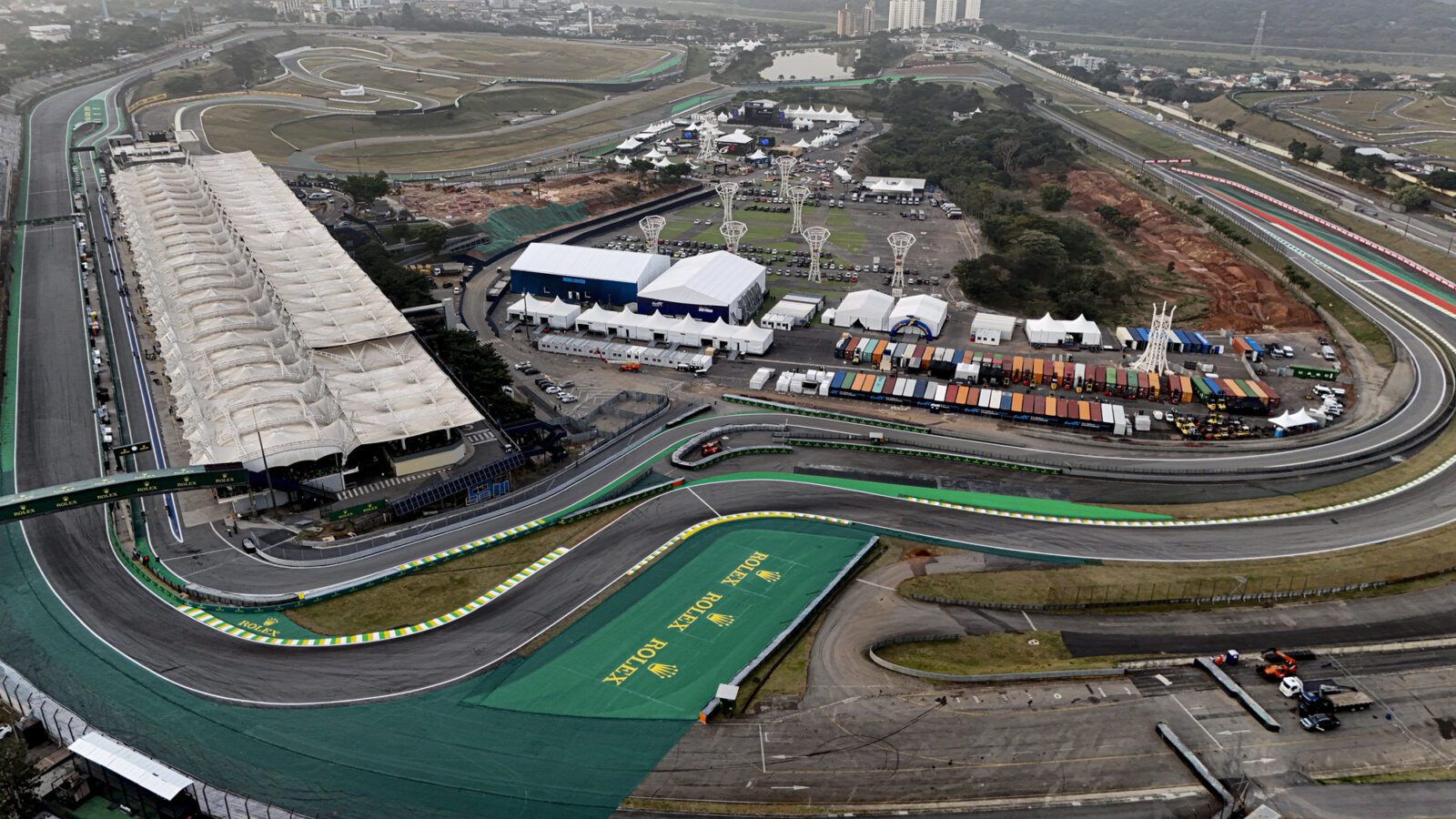
The 2026 Formula 1 season arrives at the Autódromo José Carlos Pace for the São Paulo Grand Prix, marking Round 20 of the championship. This iconic Interlagos circuit, known for its dramatic elevation changes and challenging layout, presents a unique test for teams and drivers.
The event is set to deliver intense competition, particularly with the Constructors’ Championship still in play and a tight battle for second in the Drivers’ standings.
Team pecking order and car concepts for interlagos
Mercedes enters the Brazilian Grand Prix leading the Constructors’ Championship with 630 points, holding a 126-point advantage over Ferrari. The team can secure the title in Brazil if they outscore Ferrari by at least three points.
Ferrari has shown strong recent form, outscoring Mercedes by 34 points over the past four rounds, indicating a fierce challenge.
McLaren is bringing fresh aerodynamic upgrades, including revised front and rear wings and smaller floor components, aiming to close a 17-point gap to Red Bull in the fight for third in the Constructors’ Championship. These updates are designed to improve aerodynamic efficiency and car balance, with the new front wing concept potentially influencing their 2027 car design.
Interlagos demands a high-downforce setup to compensate for its 800m altitude, which is still significant despite being lower than Mexico City. The circuit’s combination of medium-speed corners, elevation changes, and long uphill acceleration zones requires a careful compromise between downforce, traction, and straight-line performance.
Championship implications and points battles
Andrea Kimi Antonelli has already secured the 2026 Drivers’ World Championship at the Mexico City Grand Prix, becoming the youngest world champion in F1 history at 20 years and 68 days. This achievement frees the Mercedes driver to compete without championship pressure.
However, the battle for second place in the Drivers’ Championship remains wide open and highly contested.

Max Verstappen leads this chasing group with 261 points, closely followed by Lewis Hamilton on 259 points. George Russell holds 250 points, while Charles Leclerc is on 245, meaning these four drivers are separated by only 16 points entering the São Paulo event.
The Constructors’ Championship is also a key focus, with Mercedes aiming to clinch the title against a resurgent Ferrari.
Tyre strategy and pit windows
Pirelli has nominated its three softest compounds for the 2026 Brazilian Grand Prix: the C3 as the Hard, C4 as the Medium, and C5 as the Soft. This selection is one step softer than the compounds used in 2025, which ran a Sprint format weekend.
The softer allocation, combined with resurfaced sections of the track, is expected to make tyre degradation a significant factor.
Two sections of Interlagos have new asphalt: between Turns 3 and 5, and between Turns 8 and 9. These changes could alter grip levels, track evolution, and tyre behavior, particularly over longer runs.
Pirelli rates track evolution at Interlagos as five out of five, the highest possible score. The 2026 regulations feature narrower tyres and less downforce, making overheating rather than wear the dominant form of degradation.
A two-stop strategy is considered a sensible working hypothesis for the dry race, with all three compounds potentially raceable. Drivers must use at least two different slick compounds during the race if the track is dry.
The average pit loss at Interlagos is approximately 22.5 seconds.
| compound | designation | sets available (dry) |
|---|---|---|
| C3 | hard | 2 |
| C4 | medium | 3 |
| C5 | soft | 8 (plus 1 for Q3) |
Drivers to watch at são paulo
Max Verstappen has an exceptional record at Interlagos, with three victories and seven podiums across ten appearances, boasting a 70% podium rate. He remains a benchmark among experienced drivers at this circuit.
Valtteri Bottas, now with Cadillac, is a former winner of the 2021 Sprint race and has secured pole position twice at Interlagos.
Sergio Pérez, Bottas’s teammate, has scored points in eight of his 13 races at the venue. George Russell achieved his maiden F1 victory at Interlagos in 2022, making him a driver to watch for Mercedes.
Kimi Antonelli, as the newly crowned world champion, will be racing without the pressure of the title fight, potentially allowing for aggressive performances.
A significant storyline for the home crowd is the Formula 1 debut of Brazilian driver Rafael Câmara with Haas, replacing Esteban Ocon. Câmara, who is leading the Formula 2 Championship, will make his first appearance in a 2026 F1 car at his home Grand Prix.
Liam Lawson, who scored points in 2025, and Nico Hülkenberg, who also scored points with a one-stop strategy in 2025, could also be contenders.
Key factors for sunday’s Grand Prix
The unpredictable weather in São Paulo is a perennial factor, with conditions capable of changing rapidly from brilliant sunshine to torrential rain. Rain and significant temperature swings are often part of the Interlagos weekend, meaning Intermediate and Full Wet tyres could be required.
The forecast for this weekend is variable, with showers expected around Friday’s practice sessions and more persistent rain on Saturday afternoon and a cool, wet Sunday.
Interlagos has a historically high safety car probability, with interventions almost certain; the last race without a Safety Car was in 2018. The Safety Car probability is rated at 80%, and the Virtual Safety Car probability at 40%.
These neutralisation periods can significantly influence race strategies and pit stop windows.
The 2026 regulations introduce ‘Overtake Mode’ and active aerodynamics, which will play a crucial role in strategic inflection points. Overtake Mode provides additional electrical deployment for eligible pursuing cars, while active aerodynamics adjust front and rear wings for low-drag configurations in designated zones.
The detection point for Overtake Mode is after Turn 12, with activation after Turn 13, allowing drivers to prepare an attack on the uphill run to the main straight. The main overtaking opportunities remain at Turn 1 and Turn 4, at the end of the two principal straights.