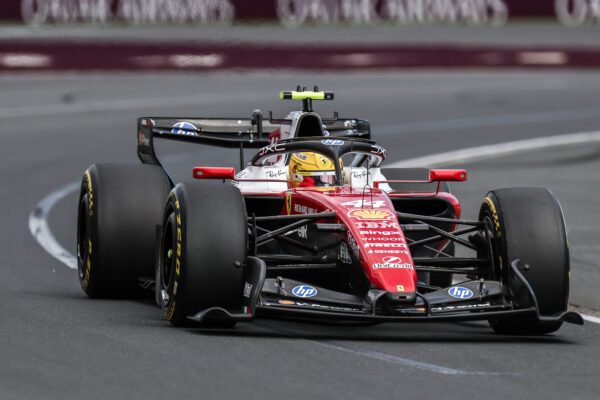




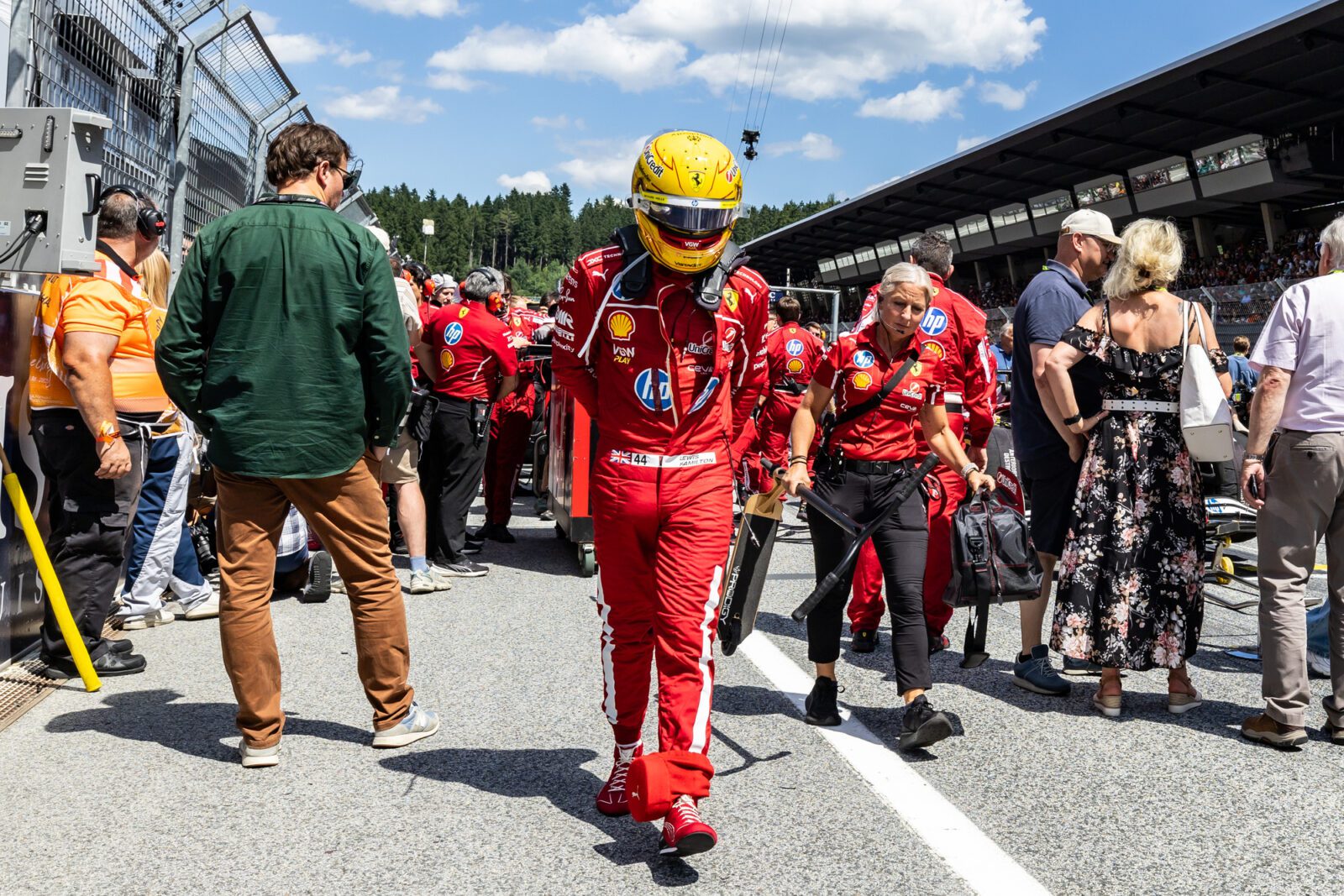
The Ferrari SF-26 has demonstrated a notable downforce advantage during the 2026 Formula 1 season, particularly on high-downforce circuits. This performance was evident in Mexico City, where the car maintained exceptional mechanical and aerodynamic grip despite the inherent challenges of low air density and reduced speeds at altitude.
The 2026 regulations introduced a fundamental shift in aerodynamic design. Underfloor ground effect and Venturi tunnels, previously primary downforce generators, were banned. The focus for designers moved significantly towards the diffuser, which has seen an increase in physical size and geometric complexity.
Formula 1 cars for 2026 are shorter and approximately 30 kg lighter than their predecessors. The wheelbase was reduced by 200mm, width by 100mm, and floor width by 150mm. These changes, alongside narrower front and rear tyres, aim to reduce drag by 40% and downforce by 15-30%.
A key regulatory change for 2026 is the introduction of active aerodynamics, replacing the Drag Reduction System (DRS). Cars now feature movable front and rear wings that adjust dynamically between ‘Straight Mode’ for low drag and ‘Corner Mode’ for increased downforce and grip.
Ferrari’s SF-26, launched on January 23, 2026, incorporates a pushrod suspension system at both the front and rear axles. This marks a departure from the pullrod front suspension used in 2025.
The SF-26’s sidepod design is crucial to its aerodynamic efficiency. Ferrari employs an overhang sidepod profile, contrasting with Red Bull’s more aggressive downwash effect. Airflow directed towards the diffuser and rear of the Ferrari primarily originates from the undercut region, supplemented by secondary flow from the sidepod’s upper surface.
Ferrari’s sidepods are oval-shaped and shorter than those on the 2025 car, with a steep profile designed to channel air towards the rear floor and diffuser. The undercut is also smaller compared to the ground-effect era. An update in June 2026 for the Barcelona Grand Prix added volume to the sidepods to enhance downforce stability.
The ‘Macarena wing’ is the paddock nickname for Ferrari’s rotating rear-wing concept, debuted during pre-season testing in Bahrain. This active aerodynamic device flips almost 180 degrees between corner and straight modes. Its purpose is to create a less restricted path for airflow, reducing aerodynamic interference and improving straight-line speed efficiency.


Ferrari’s narrower engine cover, featuring a triangular overhead airbox inlet, contributes to cleaner airflow to the rear wing. The ‘Macarena wing’ further aids this by integrating mechanical elements into the rear wing endplates, avoiding clutter in the central profile.
The diffuser and rear corner assembly are significant development areas for the SF-26. The diffuser’s primary role is to facilitate the evacuation of underfloor airflow, which accelerates downforce generation. Secondary strakes and aerodynamic elements shield the diffuser from turbulent air shed by the rear tyres while generating localised downforce.
Ferrari’s rear-end package exhibits considerable geometric complexity, including near-vertical aerodynamic elements and clever utilisation of the rear wing endplate to amplify localised downforce. The exhaust exit is nearly half shrouded, with upward-pointing fins and vertical elements directing airflow outward to manage tyre wake.
At the United States Grand Prix in October 2026, Ferrari introduced its final major aerodynamic upgrade package for the SF-26. This included a redesigned front floor leading edge, modifications to inboard board elements, a reshaped sidepod inlet and undercut, and a revised diffuser.
Sky Sports F1 reporter Ted Kravitz described a ‘snowplough’ element within this upgrade, designed to push air underneath the floor towards the diffuser. The diffuser itself was given a larger volume to generate more efficient downforce. Lewis Hamilton estimated a performance gain of approximately one tenth of a second from these Austin upgrades.
The Austin upgrades demonstrated positive correlation between CFD simulations, wind tunnel testing, and on-track performance. This correlation is considered an important signal for Ferrari’s 2027 Formula 1 development ambitions.
Despite the aerodynamic strengths, the Ferrari 067/6 power unit has presented challenges. A lack of power unit output has routinely prevented Charles Leclerc and Lewis Hamilton from consistently contending for victories.
The 2026 power unit regulations removed the MGU-H and significantly increased MGU-K output, aiming for a near 50/50 split between internal combustion and electrical power. Ferrari introduced an updated power unit specification at the 2026 Italian Grand Prix, focusing on improved energy recovery, storage, and deployment efficiency.
In Mexico City on October 31, 2026, Ferrari implemented an aggressive cooling configuration for the SF-26. This involved enlarged engine-cover vents, a wider rear hot-air outlet, and the revised sidepod inlet from Austin. These measures addressed the extreme altitude, which reduces air density and impacts power unit operation, cooling efficiency, and aerodynamic forces.
The SF-26 had not secured a single pole position in the first thirteen rounds of the 2026 season. However, Lewis Hamilton has out-qualified Max Verstappen ten times to three in the SF-26 during this period.