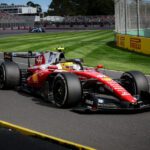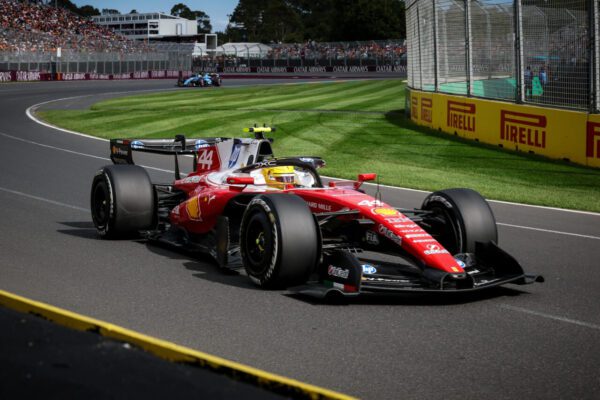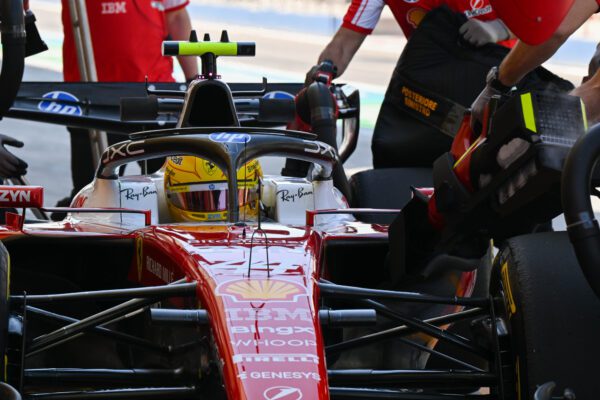



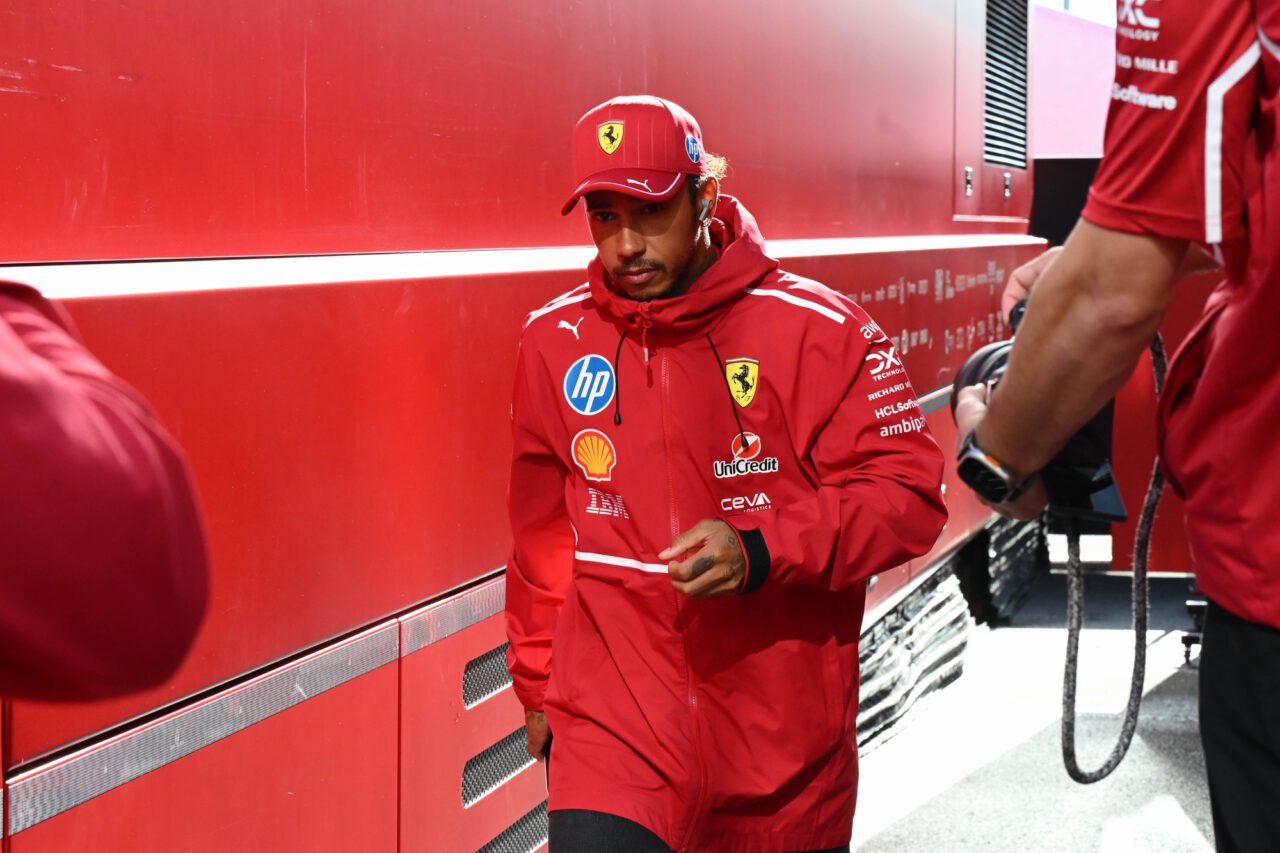
Ferrari continues its aggressive development programme for the SF-26, focusing on aerodynamic efficiency and drag reduction. The team has introduced a series of targeted upgrades to improve straight-line performance, a critical area for the current Formula 1 season. These efforts aim to maximise the car’s potential for both Charles Leclerc and Lewis Hamilton.
Ahead of the British Grand Prix at Silverstone on July 5, Ferrari brought an updated low-downforce ‘Macarena’ rear wing and a revised low-drag diffuser. This specific aerodynamic package was designed to reduce resistance on the straights while maintaining stability through high-speed corners.
The Silverstone event saw Charles Leclerc secure victory, with Lewis Hamilton finishing third. Hamilton acknowledged the improved pace of the Ferrari at the circuit, despite a strategic pit stop decision under the safety car that impacted his final position.
The push for drag reduction began earlier in the season. Ferrari introduced a significant aerodynamic and mechanical upgrade package at the Miami Grand Prix in April, targeting overall efficiency. This included revisions to the front wing, bargeboards, diffuser, floor, and rear wing of the SF-26.
Further micro-aerodynamic solutions, including a redesigned keel area, were implemented for the Austrian Grand Prix in June. These subtle changes were also aimed at improving aerodynamic efficiency by reducing drag on the high-speed Red Bull Ring circuit.
For the upcoming Belgian Grand Prix at Spa-Francorchamps on July 19, Ferrari is preparing an evolved specification of its ‘Macarena’ rear wing. This component is designed to further reduce aerodynamic drag. The team also plans to temporarily remove its innovative FTM exhaust system.
The FTM exhaust system, while providing valuable rear stability in corners, compromises engine performance. By removing it, Ferrari expects to recover approximately seven horsepower, a strategic trade-off to maximise straight-line speed at the power-sensitive Spa circuit.
Lewis Hamilton has played a direct role in the SF-26’s development, requesting specific components such as front suspension and brakes. His input has contributed to the car’s evolution, leading to his first victory with Ferrari at the Barcelona-Catalunya Grand Prix earlier this season.
Hamilton currently holds third position in the drivers’ standings, 32 points behind championship leader Kimi Antonelli, heading into the Belgian Grand Prix. Ferrari sits 78 points adrift of Mercedes in the constructors’ standings.
In addition to aerodynamic developments, Ferrari has also introduced engine upgrades. The team received two in-season development tokens from the FIA, having been measured more than four percent off the benchmark. The first stage of the ADUO engine upgrade debuted in Austria.
A second engine upgrade, including a new turbocharger, is anticipated within the next five Grands Prix, targeting the Madrid round. This phased approach to power unit development aims to further close the performance gap to rivals.
Team Principal Fred Vasseur confirmed that Ferrari made the strategic decision to shift its aerodynamic development focus to the 2026 car as early as April 2025. This early commitment was a ‘tough call’ but was deemed necessary to prepare for the new regulations.