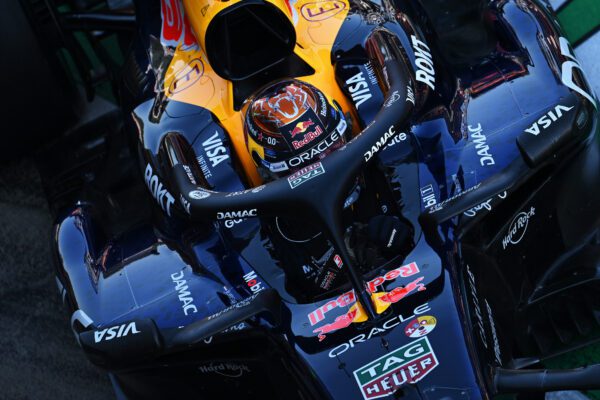





The Formula 1 paddock now moves to the Sepang International Circuit in Malaysia for the Bahrain Grand Prix, Round 16 of the 2026 Formula 1 World Championship. This event, officially designated as the ‘Formula 1 Gulf Air Bahrain Grand Prix in Malaysia 2026’, is scheduled for October 2-4, with the race on October 4.
Sepang’s return to the F1 calendar marks its first appearance since 2017, stepping in after the original Bahrain Grand Prix was postponed earlier in the season due to the 2026 Iran war. This race forms the second leg of a demanding triple-header, following last weekend’s Azerbaijan Grand Prix and preceding the Singapore Grand Prix.
Ferrari arrives in Malaysia following a mixed performance at the Azerbaijan Grand Prix on September 26. Charles Leclerc secured a fourth-place finish, while Lewis Hamilton crossed the line in sixth position.
Team Principal Frédéric Vasseur identified the SF-26’s power unit as the primary limitation, particularly evident during the opening laps and after safety car restarts in Baku. Hamilton also expressed his confusion regarding a ‘vital Ferrari issue’ that contributed to an underwhelming showing in Azerbaijan.
Vasseur indicated that the chassis advantage previously attributed to the SF-26 might have diminished. He noted that circuits like Baku and Monza represent extremes in aerodynamic sensitivity, suggesting that Ferrari’s car could perform more effectively at tracks such as Singapore.
Sepang’s layout, however, is anticipated to suit Ferrari’s SF-26 more favourably than Baku. The circuit features a combination of long straights, heavy-braking zones, and a variety of fast, flowing corners, which should highlight different characteristics of the car.
The FIA has confirmed four ‘Straight Mode’ zones at Sepang, a configuration that could benefit Ferrari in managing electrical energy. These zones allow for more efficient battery use and enable the SF-26 to exploit its low-drag settings on high-speed sections.
Effective battery management across these consecutive high-speed areas will be crucial for energy strategy. Sepang also offers several substantial braking zones, providing opportunities for energy recovery before subsequent periods of deployment.
The Malaysian venue is renowned for its high temperatures and humidity, conditions similar to Singapore, which will present a significant physical challenge for the drivers. These demanding conditions could also lead to increased tyre degradation, potentially resulting in a two or three-stop race strategy.
Overtaking is generally considered easier at Sepang compared to some other circuits on the calendar. This characteristic could lead to dynamic racing and strategic opportunities for teams.
The triple-header, encompassing Baku, Sepang, and Singapore, poses considerable logistical challenges for Ferrari. The team must manage a complex combination of air and sea freight, a significant departure from the European leg’s reliance on road transport.
Despite Sepang being a late addition to the calendar, Ferrari’s logistics department had some time to plan shipments and organise accordingly, avoiding emergency measures. Giulia Alessandro, Ferrari’s Logistics Infrastructures & Warehouse Manager, confirmed that different kits were prepared for each destination.
In the Drivers’ Championship standings after Azerbaijan, Kimi Antonelli leads with 302 points, followed by George Russell with 236 points. Lewis Hamilton is third with 199 points, and Charles Leclerc holds fifth position with 179 points.
Mercedes currently leads the Constructors’ Championship with 538 points. Ferrari is in second place with 378 points, ahead of McLaren in third with 306 points.
Ten current drivers have prior experience racing at Sepang, including Lewis Hamilton, who won the Malaysian Grand Prix in 2014, and Fernando Alonso, a three-time winner at the circuit. Championship leader Kimi Antonelli has only experienced the track on the simulator.