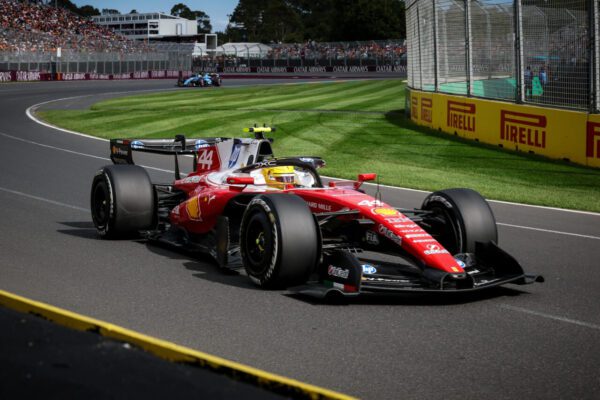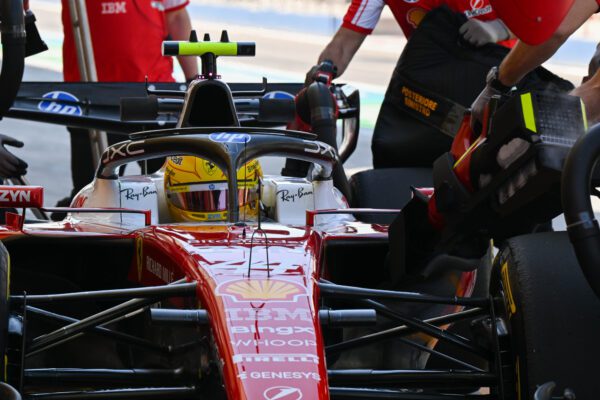





Ferrari’s 2026 Formula One campaign has shown a gradual improvement in qualifying performance across the opening nine races. The Scuderia began the season with a significant deficit to pole position, but has consistently reduced this margin.
In Australia, Ferrari started the year over one percent away from pole. Mercedes produced a commanding qualifying performance in Melbourne, with George Russell securing pole position. The SF26 was 1.030% behind, reflecting a lack of outright one-lap pace compared to Mercedes’ new-generation W17 package.
One race later in Shanghai, Ferrari demonstrated clear improvements. The qualifying deficit shrank dramatically to 0.381%, cutting the Australian gap by almost two-thirds. This indicated that the opening weekend had not been fully representative of Ferrari’s true pace.
Suzuka presented one of Ferrari’s most difficult weekends. The qualifying deficit increased to 0.591%. The circuit highlighted a main weakness under the new 2026 regulations: power unit energy deployment.
Suzuka’s long high-speed sections place heavy demands on electrical energy management. Ferrari struggled to extract maximum performance throughout the lap, allowing Mercedes to extend their advantage.
Following Japan, Ferrari entered a more consistent phase. The deficits across Miami, Montreal, and Monaco were similar: 0.393%, 0.400%, and 0.316% respectively. These figures suggested a stable qualifying performance level had been established.
The SF26 became a regular front-running contender, particularly on circuits where outright energy deployment was less critical. This period saw Ferrari consistently within several tenths of pole position.
The Spanish Grand Prix produced Ferrari’s strongest qualifying performance of the season. Lewis Hamilton came close to securing pole position, missing out by just 0.086% to George Russell.
This was Ferrari’s smallest deficit of the year, demonstrating the SF26 possessed genuine pole-winning pace under optimal conditions. For the first time in 2026, Ferrari appeared capable of matching Mercedes over a single lap.
Despite introducing the team’s first ADUO power unit upgrade, Ferrari’s qualifying deficit increased in Spielberg. The Scuderia finished 0.357% away from pole position.
Austria again hinted that Ferrari continued to struggle with energy deployment on circuits demanding sustained electrical performance. This limited the full potential of the upgrade package.
Ferrari also struggled for an optimal balance at the Red Bull Ring, preventing them from fully exploiting their usual strengths through medium-speed corners. This contributed to the increased deficit.
Ferrari arrived at Silverstone in strong form. Lewis Hamilton secured Sprint Pole, and both Ferrari drivers were competitive throughout the weekend.
In Grand Prix qualifying, Charles Leclerc qualified 0.199% behind championship leader Andrea Kimi Antonelli. Silverstone confirmed Ferrari had become a genuine front-row contender.
Leclerc converted that pace into victory on Sunday, claiming Ferrari’s first British Grand Prix win under the new regulations. This marked a significant race result for the team.
The overall trajectory is encouraging. Excluding Australia and the energy-sensitive Suzuka circuit, Ferrari has generally operated within two to four tenths of a percent from pole position.
Barcelona proved the SF26 has pole potential, while Silverstone reinforced that Ferrari’s one-lap pace is no longer far behind Mercedes. However, fluctuations at Suzuka and Austria indicate an unresolved limitation.
Tracks with high demands on electrical energy deployment continue to expose weaknesses in Ferrari’s power unit management. This prevents the Scuderia from consistently extracting maximum qualifying performance.