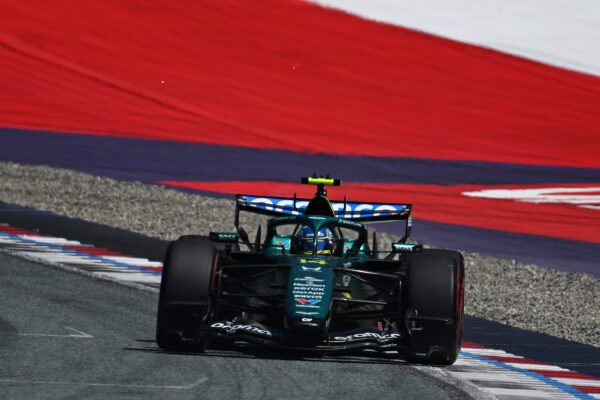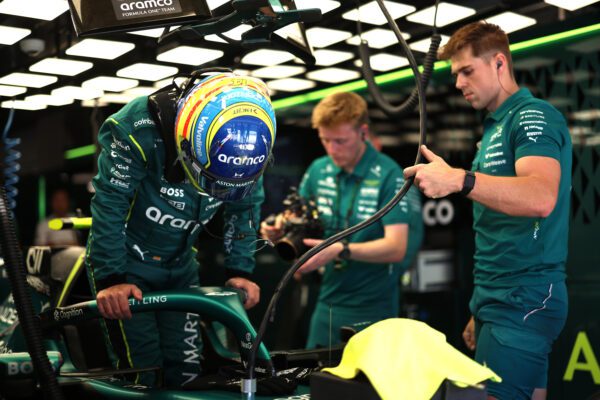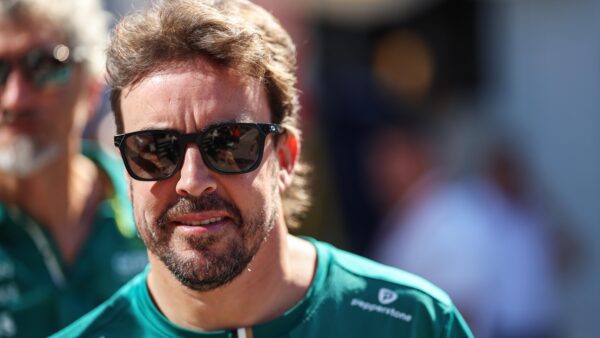





Fernando Alonso has voiced concerns that Formula 1 cars may be slower than Formula 2 machinery at the upcoming Belgian Grand Prix. The two-time world champion highlighted potential performance deficits under specific energy deployment scenarios at the Circuit de Spa-Francorchamps.
Alonso’s warning stems from the new 2026 Formula 1 technical regulations, which mandate a near 50/50 split between internal combustion engine (ICE) and electrical power. This shift places significant emphasis on energy management throughout a Grand Prix weekend.
Tracks like Spa-Francorchamps and Silverstone are particularly challenging due to their long straights and limited heavy braking zones. These characteristics make energy recovery difficult, classifying them as ‘energy-poor’ circuits.
The Aston Martin driver explained that if an optimal energy deployment strategy is followed at Spa, drivers might experience an entire sector with no electrical deployment. This would significantly reduce the car’s overall power output.
In such a situation, the F1 car would rely solely on its internal combustion engine, which is capped at approximately 535 bhp. This figure is notably less than the 620 bhp produced by the 3.4-litre Mecachrome V6 turbo engine used in current Formula 2 cars.
The 2026 F1 regulations introduce lighter and smaller cars, with a minimum weight reduced by 30kg to 768kg. Wheelbase and width have also been decreased, alongside narrower Pirelli tyres.
Aerodynamic changes include a 30% reduction in downforce and a 55% decrease in drag, achieved through less reliance on ground effect and the implementation of flatter floors. Active aerodynamics, featuring movable front and rear wings, are now standard.
These active aero systems allow for a ‘Z-Mode’ for cornering grip and an ‘X-Mode’ for low-drag straight-line speed. A new Manual Override system also provides a temporary boost of battery power for overtaking.
FIA single-seater director Nikolas Tombazis previously downplayed concerns about overall lap times, stating that the focus remains on improving racing spectacle. He indicated that the new cars would ‘certainly not as slow as F2’ in general performance.
Further power unit revisions for 2026 include the removal of the MGU-H and a substantial increase in MGU-K power from 120kW to 350kW, aiming for a more balanced hybrid system.
‘Silverstone and Spa, they are very thirsty on energy, and you cannot deploy in all the straights,’ Alonso stated. ‘Next week, it’s going to be the same thing. If you deploy at Spa from Turn 1 to 5, finito for the rest of the lap.’
Alonso’s comments highlight a critical challenge for teams and drivers as they adapt to the new technical framework, particularly at circuits demanding sustained power output. The Belgian Grand Prix is scheduled for this weekend.