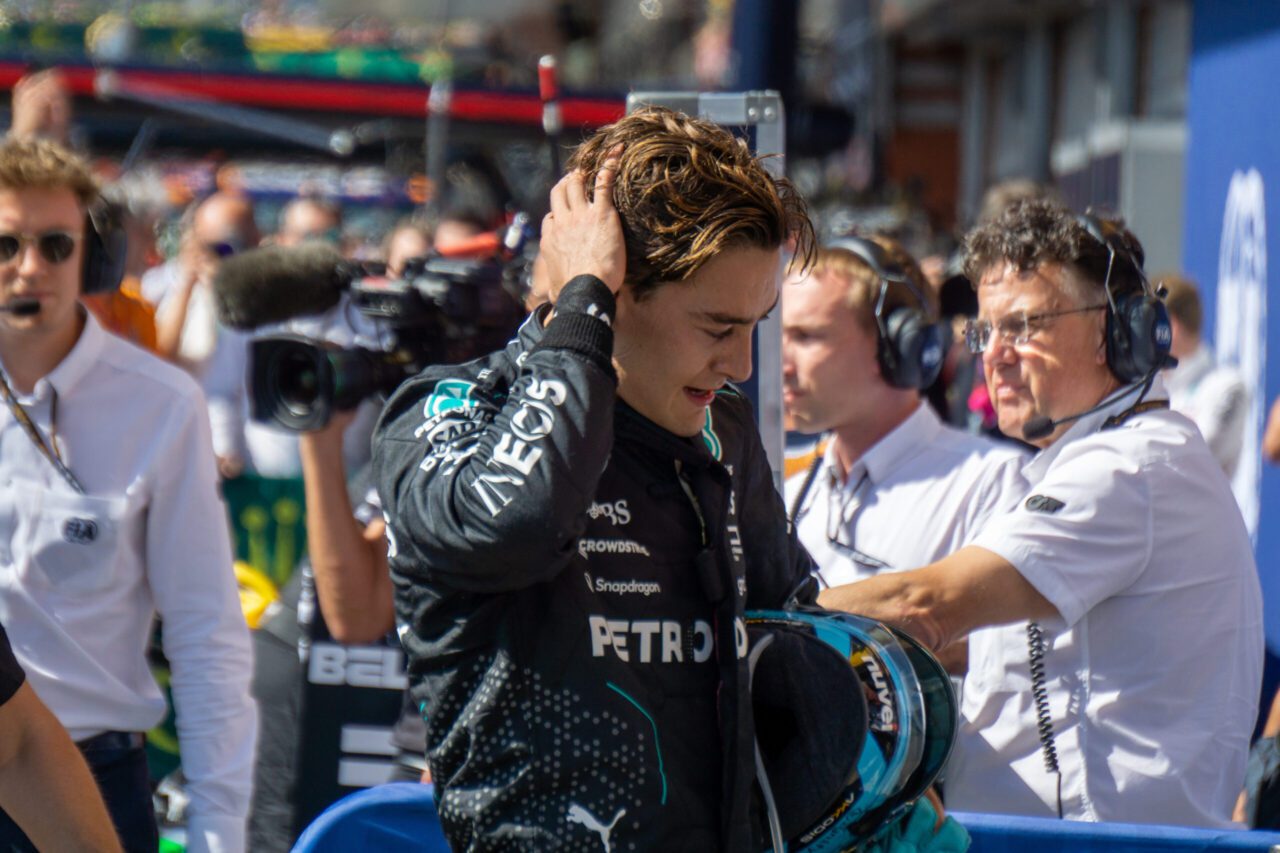
Mercedes faced significant power unit deployment issues during the Belgian Grand Prix, with George Russell’s race ending prematurely on the opening lap due to a severe lack of boost. The problem was not isolated to Russell’s car, as all Mercedes-engined vehicles on the grid experienced a deficit in energy deployment at Spa-Francorchamps. This systemic issue has prompted further investigation by the team.
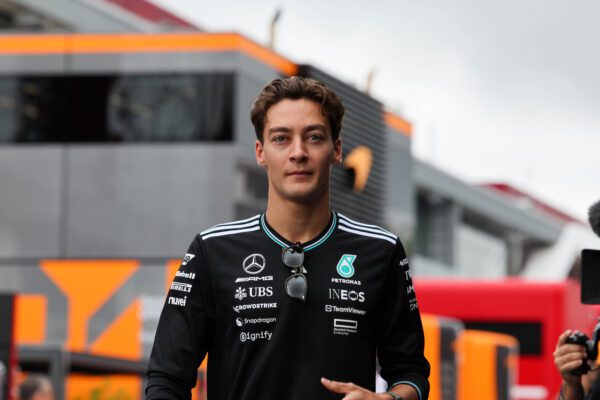
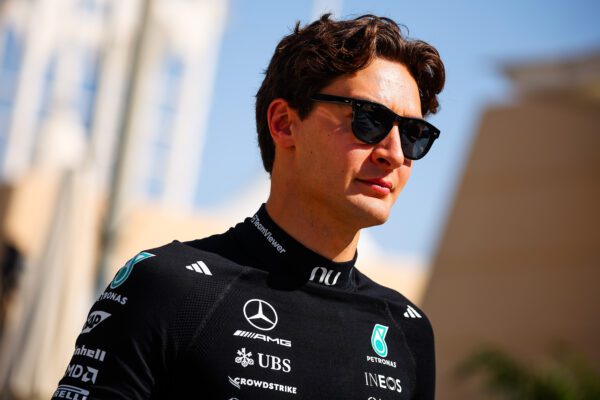
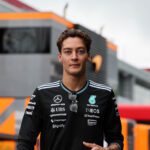
Russell, starting from third position, reported a 30-40% battery deficit exiting Turn 1 and zero percent battery power by the top of Eau Rouge. This left his Mercedes W17 critically vulnerable on the Kemmel Straight, where he was overtaken by multiple cars. He described his car as being ‘slower than a Formula 2 car’ at that point.
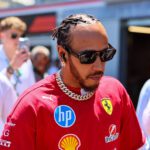
The loss of power deployment led to contact with Lewis Hamilton’s Ferrari at Les Combes, resulting in Russell’s retirement from the race. Hamilton received a five-second time penalty for the collision, though he maintained it was a racing incident. Russell did not attribute blame to Hamilton, instead focusing on his car’s performance.
Mercedes Team Principal Toto Wolff confirmed the widespread nature of the problem. He stated that all Mercedes engines suffered from a lack of energy out of Turn 1, affecting Russell more severely than his teammate Andrea Kimi Antonelli. Wolff accepted full responsibility for the technical failure.
“All Mercedes engines had a lack of energy out of Turn 1, so it wasn’t only George. It affected him more than Kimi [Antonelli], but also Kimi had that issue to a certain degree. That meant that he [Russell] didn’t come out at the end of the straight in P3, but P5. So he lost his two positions, and then obviously [had] the accident with Lewis. It’s unfortunate, losing points for him, losing points in the constructors’ championship, and it’s like every weekend we have one car that doesn’t finish.”
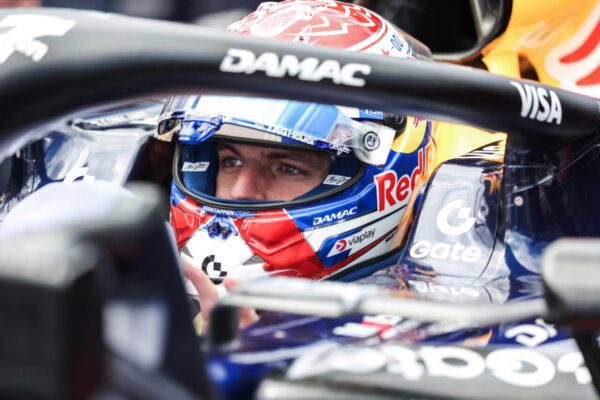
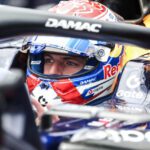
Even race winner Antonelli, who secured his sixth victory of the 2026 season, experienced the deployment issue. He described the opening lap as ‘crazy’ and ‘confusing’ after being passed by Max Verstappen and nearly by Charles Leclerc due to the unexpected power fluctuations.
The 2026 Formula 1 season introduced significant power unit regulation changes, including a near 50:50 split between internal combustion and electric power, and the removal of the MGU-H. These new rules emphasize complex energy recovery and deployment strategies, with drivers having new ‘Boost’ and ‘Overtake’ modes.
Andrew Shovlin, Mercedes Trackside Engineering Director, acknowledged the team is still working to fully understand the behaviour of these new-generation power units and energy deployment systems. He noted that despite Antonelli’s victory, the team is still encountering issues with the current regulations.
Russell voiced considerable frustration throughout the Belgian Grand Prix weekend, particularly regarding a perceived performance deficit compared to Antonelli on the straights since Silverstone. He explicitly requested to have ‘the same car as Kimi’.
Wolff, while taking responsibility for the power unit issue, also offered a nuanced perspective on Russell’s performance. He suggested that approximately 50 percent of Russell’s difficult weekend could be attributed to the power unit, with the other half potentially related to driving inputs.
Antonelli’s victory at Spa-Francorchamps extended his championship lead to 50 points over Russell and 45 points over Lewis Hamilton. This result further complicates Russell’s title aspirations in the ongoing 2026 season.