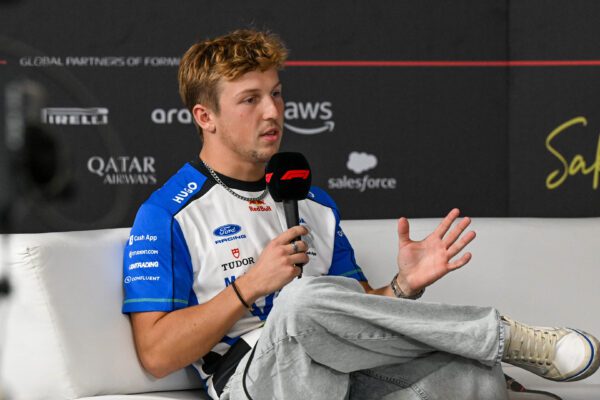





Liam Lawson has established a strong presence for Racing Bulls during the 2026 Formula 1 season. The New Zealander has consistently delivered points finishes, marking a significant turnaround in his performance this year. He has secured multiple Q3 appearances, demonstrating the team’s competitive midfield position.
Lawson recently qualified ninth for the Austrian Grand Prix on June 28, 2026, and secured an eighth-place start in the British Grand Prix sprint race on July 27, 2026. These results contribute to his current five-race point-scoring streak.
The 2026 regulations have introduced significant changes to qualifying, particularly concerning battery deployment and recharge. Lawson has acknowledged the complexity of these new rules, describing the challenge as ‘extremely’ difficult.
He noted that the current qualifying format involves ‘more processing, and more rules to follow’ compared to previous seasons where drivers could push flat-out. This shift requires a different approach to extracting maximum performance from the car.
His teammate, Arvid Lindblad, a rookie on the 2026 grid, is also navigating these new regulations. Lindblad, making his Formula 1 debut this season with Racing Bulls, qualified tenth at the Austrian Grand Prix, securing a double Q3 appearance for the team.
Lindblad joined Racing Bulls after an impressive junior career, including becoming the youngest race-winner in Formula 2 in 2025. He finished sixth in the F2 championship before his promotion to F1.
Isack Hadjar, who moved to Red Bull Racing for 2026 to partner Max Verstappen, has also commented on the impact of the new regulations. Hadjar was promoted after a strong rookie F1 season with Racing Bulls in 2025, which included a podium at the Dutch Grand Prix.
Hadjar highlighted that ‘energy-rich’ circuits, such as the Hungaroring, facilitate ‘classic racing’ under the new rules. Conversely, he described ‘energy-starved’ tracks like Spa-Francorchamps as offering ‘one of the worst’ driving experiences due to battery management constraints.
Racing Bulls, powered by a new Ford Red Bull Powertrains engine, has consistently performed as the ‘best of the midfield’ this season. The team’s ability to place both cars in Q3, as seen in Austria, underscores their competitive package.
Lawson’s current form represents a significant recovery following his demotion from Red Bull back to Racing Bulls after just two races in the 2025 season. His strong performances in 2026 have solidified his position as a key asset for the team.