

Lewis Hamilton has directly addressed the perception that Formula 1’s previous ground-effect era exposed a weakness in his driving capabilities. The seven-time World Champion has pushed back against this notion, which gained traction during the 2022-2025 seasons. Hamilton’s comments come as he experiences a resurgence in the current 2026 Formula 1 season with Ferrari.
Hamilton stated that despite the characteristics of the ground-effect cars not suiting him, he still secured more race victories than most other drivers during that four-year period. He highlighted that his driving approach in the races he won during the preceding car generation remains consistent with his current style.
The ground-effect regulations, introduced in 2022, significantly altered the aerodynamic profile of F1 cars, focusing on downforce generated from the underbody. This era saw Hamilton’s results noticeably decline compared to his dominant years.
During the 2022 and 2023 seasons, Hamilton did not achieve any victories, marking a first in his career. He secured two wins across the entire 2022-2025 ground-effect period. One victory came at the British Grand Prix in 2024, followed by another in Belgium after George Russell’s disqualification.
A significant factor in Hamilton’s struggles was Mercedes’ unique zero sidepod configuration, which failed to produce the anticipated downforce levels. The 2022 season was particularly challenging for him due to persistent porpoising issues with the Mercedes car.
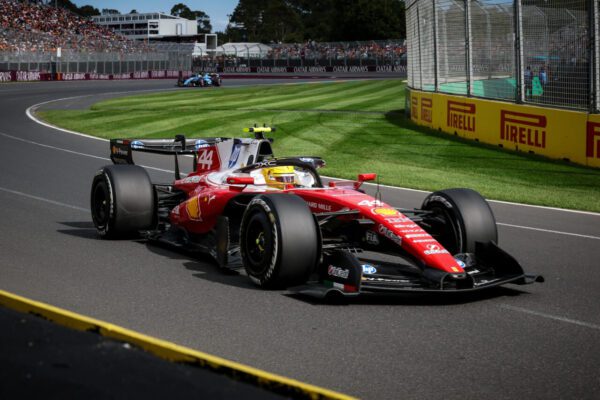
Hamilton’s difficulties continued into his maiden season with Ferrari in 2025. He finished the year without a single Grand Prix podium and was outperformed by his teammate, Charles Leclerc, who achieved seven podium finishes. This performance further fueled theories regarding his adaptation to ground-effect machinery.
Anthony Davidson, a Sky F1 analyst, has previously suggested that the root of Hamilton’s difficulties could be traced back to the introduction of the 2022 ground-effect regulations. Hamilton himself has described the ground-effect era as the most physically and technically demanding period he has encountered in his career.
He also repeatedly emphasised that the ground-effect cars were incompatible with his precise driving style. The cars were excessively stiff and prone to bottoming out, requiring substantial adaptations from drivers.
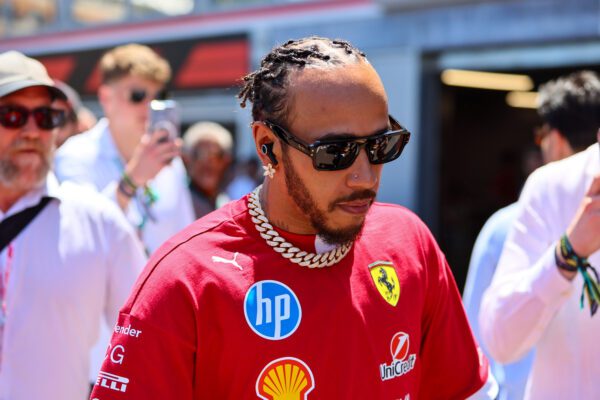
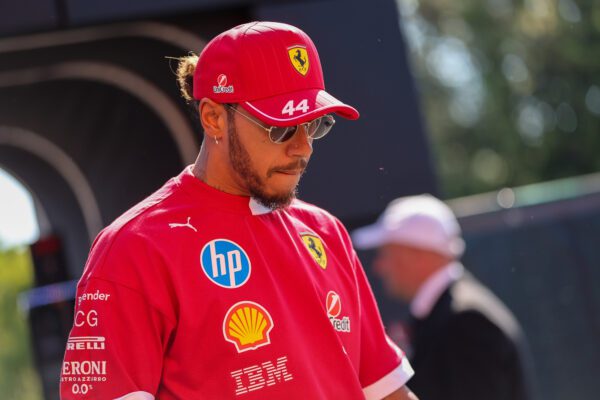
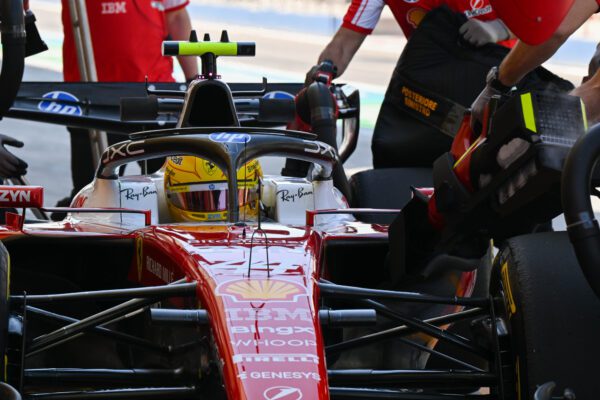
However, the 2026 season has brought a change in fortunes for Hamilton. He is currently leading the charge for Ferrari in the new, lighter, and more nimble SF-26 car. Hamilton noted that these new cars are ‘a little bit easier, more forgiving,’ allowing him to drive in a manner more akin to previous generations of Formula 1 cars.