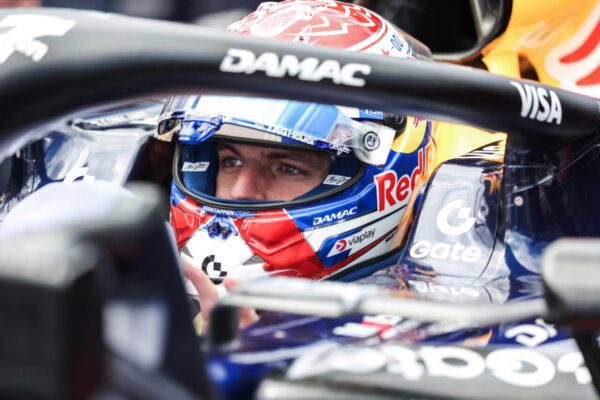




Red Bull driver Isack Hadjar has articulated concerns regarding the impact of the 2026 Formula 1 regulations on circuit suitability, particularly contrasting the driving experience at ‘energy-rich’ and ‘energy-starved’ tracks. Following the Hungarian Grand Prix, Hadjar described the event at the Hungaroring as a return to ‘classic racing’ due to its energy recovery opportunities.
Conversely, Hadjar stated that circuits like Spa-Francorchamps, despite their popular layouts, offer ‘one of the worst’ driving experiences under the current rules. This disparity stems from the new power unit regulations, which heavily emphasise energy management.
The 2026 technical regulations mandate a near 50/50 split between internal combustion engine (ICE) power and electrical power. This shift involved the removal of the MGU-H and a significant increase in the MGU-K’s electrical output. Cars are also designed to be smaller, lighter, and more agile, incorporating active aerodynamics.
A key challenge under these regulations is ‘super-clipping,’ where the battery depletes before the end of long straights, causing a loss of top speed. Circuits with numerous heavy braking zones and slower corners, such as the Hungaroring, facilitate greater energy recovery.
However, tracks featuring long straights and fewer heavy braking areas, like Spa, make it difficult to recover sufficient energy, exacerbating the super-clipping effect. Drivers are often forced to ‘lift and coast’ to recharge batteries, which compromises outright performance.
The FIA has acknowledged these issues and implemented adjustments to the regulations. The permitted energy recharge per lap has been reduced from 8MJ to 7MJ, and the maximum energy recovery during super-clipping has been increased from 250kW to 350kW. These tweaks aim to reduce the duration of super-clipping to approximately two to four seconds per lap.
Despite these changes, widespread criticism from drivers persists. Max Verstappen has been a vocal opponent, describing the 2026 rules as ‘terrible’ and ‘not fun at all,’ even likening the experience to ‘Formula E on steroids.’ He has called the regulations ‘fundamentally flawed.’
Other drivers have echoed similar sentiments. Lando Norris labelled the 2026 cars ‘the worst,’ while Carlos Sainz expressed concerns about the ‘dangerous’ nature of the new active aerodynamics. Esteban Ocon found the racing ‘painful,’ and Sergio Perez described it as ‘a lot less fun.’ Conversely, George Russell has adopted a more positive stance, suggesting that some criticism may be linked to competitive performance.
Hadjar noted the contrast between the Belgian Grand Prix, where regulations were a significant topic, and the Hungarian Grand Prix, where they were not. He stated, ‘It feels good to reach your top speed at the end of the straight. Back to classic racing.’
‘It’s a bit sad that now you are ranking the good tracks as high energy tracks. That’s how it is. That’s how we rank the tracks now. You know, Spa is one of the best tracks, but it was one of the worst to drive.’
Hadjar, currently partnering Max Verstappen at Red Bull, sits 41 points behind his teammate at the summer break. He finished P6 at the Hungarian Grand Prix and secured his first points of the season with a P8 finish at the Chinese Grand Prix.
Earlier this season, Hadjar impressed at Silverstone, qualifying P5 ahead of Verstappen despite later experiencing a wing issue during the race. He has finished ahead of Verstappen on three occasions this season. Hadjar has indicated that the Red Bull car has become ‘more reliable’ in recent rounds, though he cautions that its performance remains ‘far from the level I’d like.’