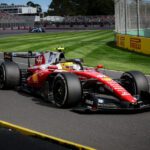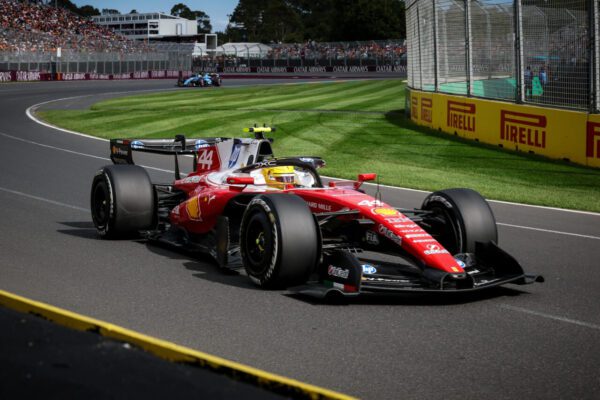




Ferrari’s early season advantage in race start performance has significantly diminished following a revised FIA procedure introduced for the 2026 Formula 1 season. The Scuderia’s compact turbocharger concept, which previously allowed for rapid boost build-up, no longer provides the decisive edge it once did.
The FIA implemented the new start protocol after concerns arose during pre-season testing in Bahrain regarding power unit preparation. From the Australian Grand Prix onwards, drivers now receive an additional five-second pre-start warning.
This warning is signalled by all grid panels flashing blue before the standard starting light sequence commences. The extra time allows drivers to stabilise engine revolutions and prepare their turbochargers more consistently for launch.
The objective of this regulatory adjustment was to reduce the disadvantage for teams whose power units required more time to spool up, thereby levelling the playing field across the grid.
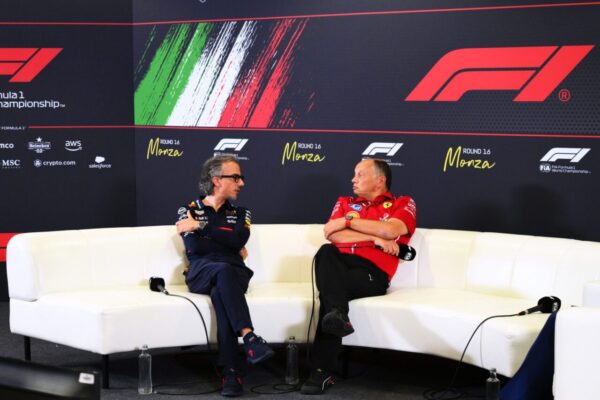
Fred Vasseur, Ferrari Team Principal, openly criticised the change, stating it effectively altered a technical area where Ferrari had gained a competitive advantage through ‘clever engineering’.
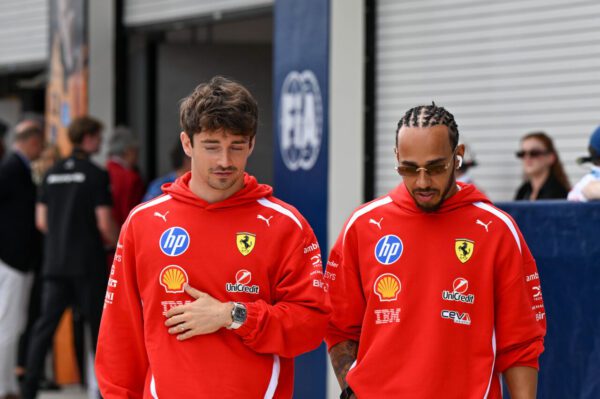
The opening metres of the British Grand Prix Sprint at Silverstone provided clear evidence of this shift. While Charles Leclerc and Lewis Hamilton both overtook pole-sitter Andrea Kimi Antonelli at the start of Sunday’s main Grand Prix, the Sprint told a different story.
Antonelli, driving for Mercedes, produced one of the strongest launches of the weekend in the Sprint, successfully defending his lead into the opening corners before converting it into victory.
Acceleration data from the Sprint illustrates the competitive gains made by Mercedes and McLaren. Lando Norris of McLaren recorded the quickest launch to 100 km/h in 2.6 seconds.
Norris also matched the fastest 0–200 km/h time of 4.7 seconds. Antonelli was only a tenth slower to 100 km/h, clocking 2.7 seconds, yet reached 200 km/h in the same 4.7 seconds.
This performance highlighted the impressive efficiency of the Mercedes launch and traction package. Oscar Piastri, also from McLaren, was equally competitive.
Piastri reached 100 km/h in 2.5 seconds, the fastest of anyone in the field, but required 4.8 seconds to reach 200 km/h. This suggests exceptional initial traction before a slight drop-off in acceleration.
These figures collectively suggest McLaren may currently possess the strongest overall launch characteristics on the grid, particularly over the crucial first 100 metres.
Ferrari’s performance was more mixed. Lewis Hamilton still achieved a strong getaway, reaching 100 km/h in 2.7 seconds and 200 km/h in 4.8 seconds.
These figures placed Hamilton among the better starters in the Sprint, though they no longer represent the clear advantage Ferrari displayed earlier in the season.
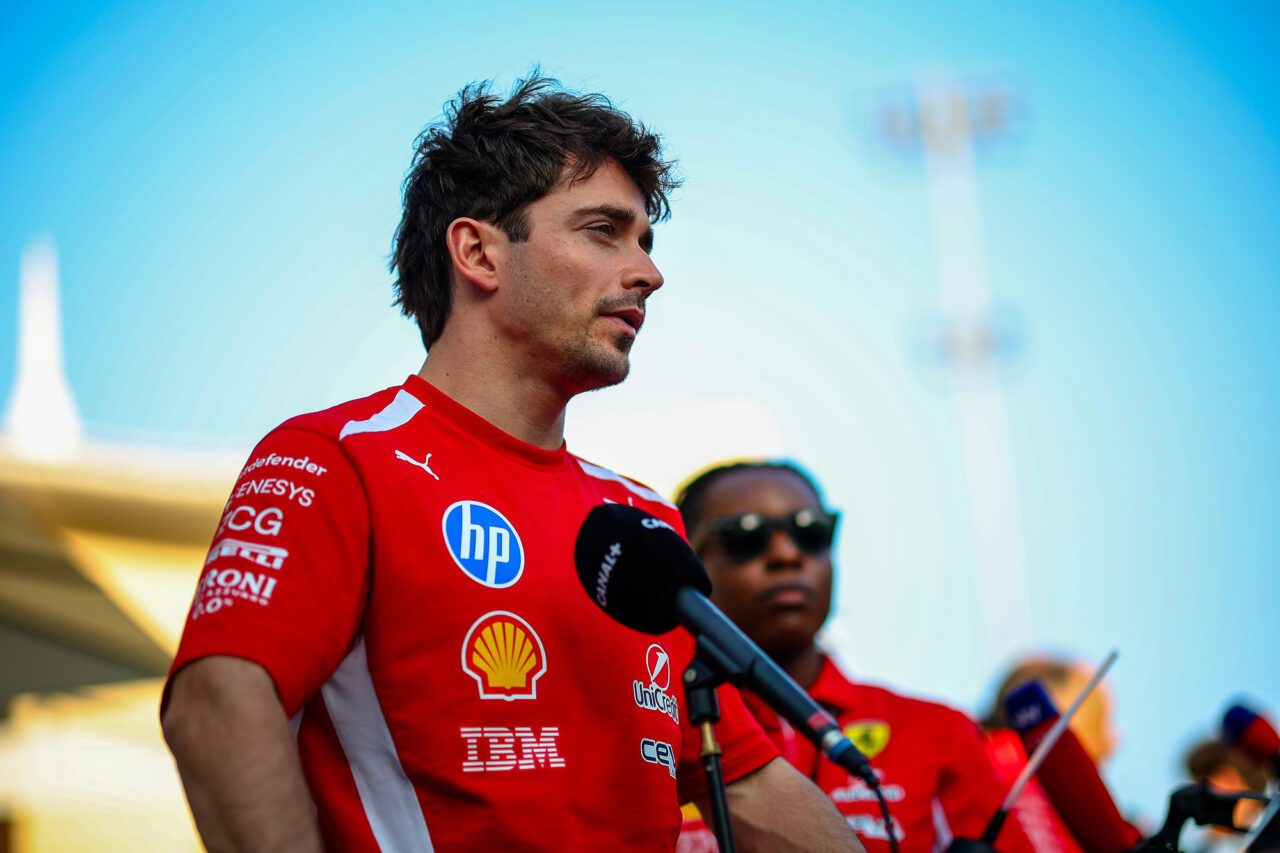
Charles Leclerc’s launch, however, was one of his weakest of the year. The Monegasque required 3.3 seconds to reach 100 km/h and 5.4 seconds to hit 200 km/h.
This left Leclerc well behind the leading runners during the opening phase of the Sprint race, a stark contrast to Ferrari’s explosive starts seen during the opening Grands Prix.
However, Leclerc and his race engineer Bryan Bozzi managed to find a solution for the issue for the main race, allowing the Monegasque to leapfrog Antonelli into Turn 1.
The data also confirms Audi continues to struggle when the lights go out. Gabriel Bortoleto recorded the slowest acceleration in the field during the Sprint.
Bortoleto took 3.7 seconds to reach 100 km/h and 6.0 seconds to reach 200 km/h. Teammate Nico Hülkenberg fared slightly better with 3.4 seconds to 100 km/h and 5.6 seconds to 200 km/h.
These figures still placed Audi near the back of the field for launch performance. The FIA’s revised start procedure appears to have achieved its intended objective.
The differences between the various power unit concepts have been reduced. Ferrari’s innovative turbo design remains capable of producing strong launches, as Hamilton demonstrated.
However, it no longer provides the decisive edge it enjoyed during the opening races of the season. McLaren and Mercedes have closed the gap significantly.
Norris, Piastri, and Antonelli all produced outstanding acceleration figures in the Silverstone Sprint. While Sunday’s Grand Prix showed that race starts are still influenced by driver reactions, clutch control, and positioning into Turn 1, the Sprint acceleration data suggests Formula 1’s launch performance has become more closely matched than at any point so far in 2026.