

Max Verstappen has urged Formula 1 to learn from the chaotic start to the Bahrain Grand Prix in Malaysia, which saw multiple cars suffer power unit issues during the formation lap. The incident, stemming from a software bug, led to significant delays and widespread confusion among drivers and teams at the Sepang International Circuit on Sunday, October 4, 2026.
The initial attempt to start the race, following a torrential rain delay, was aborted after several cars either crawled at extremely slow speeds or stopped entirely. Drivers were left attempting to restart their complex systems on track.
Lewis Hamilton, driving for Ferrari, was among those affected, describing the unusual procedure he had to undertake. ‘I had to stop on-track, stop the car, the engine, and restart it. I’ve never done that before,’ Hamilton stated. He also likened the bizarre scenes to a ‘Lego-race,’ a comment Verstappen acknowledged.
Mercedes driver Kimi Antonelli, currently leading the 2026 championship, also expressed his bewilderment. ‘It was insane,’ Antonelli remarked. ‘At some point we were five-wide in the straight, because we couldn’t understand what was going on.’
The root cause was identified as a software bug within the FIA-issued power unit control systems. This occurred due to an ‘unprecedented combination of low engine speed, low-grip conditions, wet-weather energy management settings and the Sepang circuit’s sector configuration.’
Specifically, the 2026-specification cars, featuring a near 50-50 split between engine and battery power, utilise a wet-weather mode that limits electrical deployment to 250kW. In certain sectors, like Turn 9 at Sepang, where MGU-K ramp-down is not typically required, the system became confused at low speeds.
This triggered a ‘continuous offset,’ a 60-second emergency lockdown that affected both electrical and internal combustion engine power. The FIA responded by issuing an emergency software patch to teams, removing the 250kW restraint in the problematic sectors to allow cars to circulate.
FIA single-seater boss Nikolas Tombazis explained that the software had not been extensively tested in wet conditions due to a lack of such running during the current season. He acknowledged that the update was a ‘rushed job’ but necessary to resume the race.
This incident is not isolated, as software-related issues have surfaced throughout the 2026 season. George Russell attributed a lack of pace at the Belgian Grand Prix to electrical system software, while Oscar Piastri experienced an unexpected power surge causing a spin in Australia.
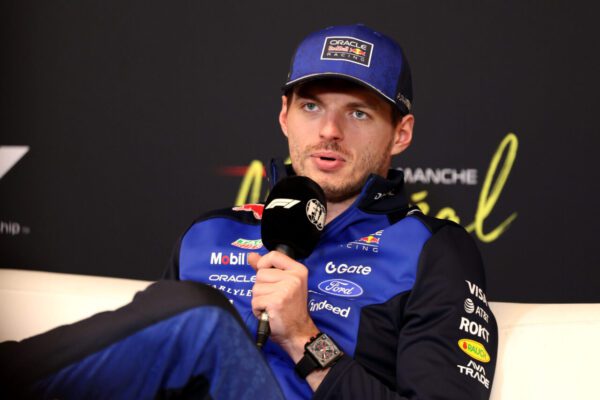
Valtteri Bottas, driving for Cadillac, also reportedly blamed confused software affecting his braking for a crash at the Azerbaijan Grand Prix. Verstappen, who ultimately won the Bahrain Grand Prix in Malaysia, reiterated his concerns about the increasing complexity of F1 technology.
‘What can you say? It’s not what you want for the sport. I hope there is a lesson learned,’ Verstappen concluded, highlighting the vulnerability of modern Formula 1 machinery.