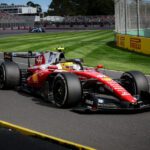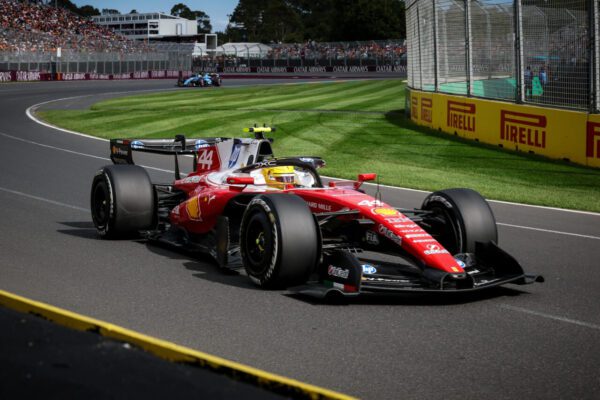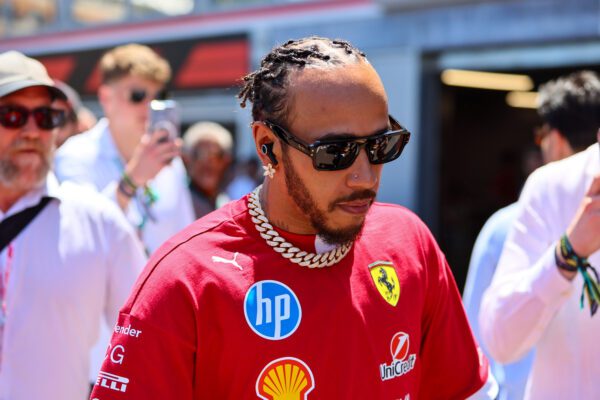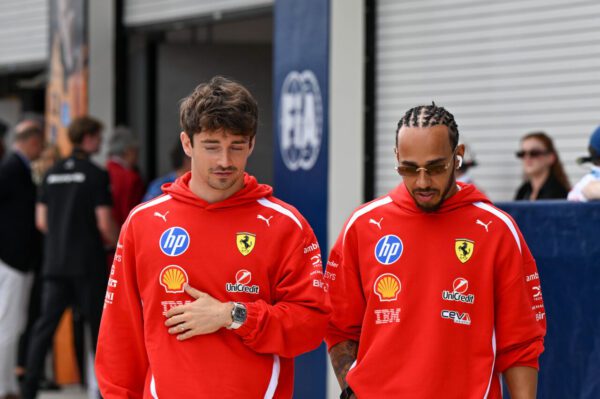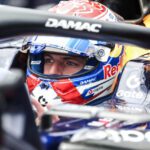
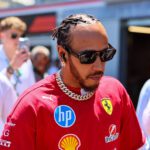
Charles Leclerc secured his first victory of the 2026 Formula 1 season at the British Grand Prix, delivering Ferrari’s initial Grand Prix win of the year. The triumph at Silverstone marked Leclerc’s ninth career Formula 1 victory. Despite this success, the Ferrari driver has expressed caution, indicating that one strong weekend does not signify a complete resolution to his ongoing struggles with the SF-26.
Leclerc’s win at Silverstone was a significant moment for Ferrari, also marking the team’s 250th Formula 1 World Championship victory. He started from the front row, making a decisive move to pass pole-sitter Andrea Kimi Antonelli into Turn 1.
The race saw Mercedes’ Antonelli’s challenge unravel due to a mechanical issue with his left front wheel shield on Lap 41, leading to two pit stops and a subsequent penalty. Max Verstappen also crashed in the closing stages, resulting in a Safety Car finish.
Leclerc’s victory came after a challenging period where he openly discussed difficulties adapting to the SF-26’s characteristics. Team Principal Fred Vasseur noted earlier in the season that the SF-26 was not naturally suited to Leclerc’s driving style, despite his efforts to adapt.
The Monegasque driver had a strong start to the 2026 campaign, finishing third in Melbourne and fourth in China. However, he subsequently lost confidence in the car following various changes to the SF-26.
This difficult spell included consecutive retirements in Monaco and Barcelona, along with an eighth-place finish in Austria despite a promising front-row start. He also crashed during qualifying in Spain and retired from the race due to a power steering failure.
Canada proved particularly challenging for Leclerc, who described it as his most difficult weekend of the season, qualifying eighth and finishing significantly behind teammate Lewis Hamilton. Hamilton had previously secured Ferrari’s first win of 2026 in Barcelona.
A crucial factor in Leclerc regaining confidence at Silverstone was a change in brake material from Brembo to Carbon Industries, aligning with Hamilton’s setup. This adjustment, implemented a few races prior to Silverstone, necessitated a re-evaluation of several aspects of the car’s package.
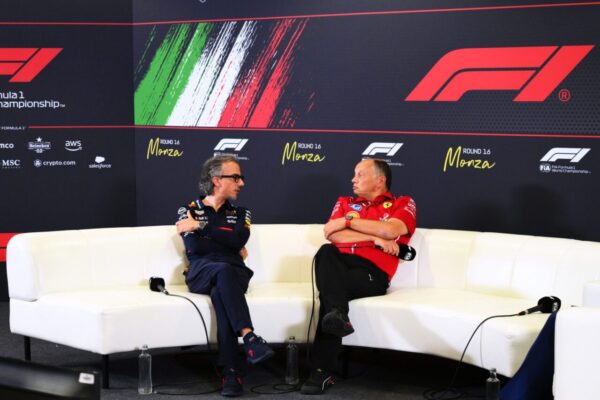
Vasseur consistently maintained that Leclerc’s underlying performance was not the issue, with data indicating his pace remained strong. The primary concern was the driver’s confidence in the car, which the Silverstone victory significantly boosted.
Ferrari has pursued an aggressive upgrade strategy for the SF-26 this season to close the gap to Mercedes. A substantial development package was introduced at the Barcelona-Catalunya Grand Prix in June, featuring revisions to the front wing, nose, floor, diffuser, and sidepods.
These Barcelona upgrades aimed to enhance aerodynamic balance, improve front-wheel wake control, and provide a more predictable platform for the SF-26. The package was instrumental in transforming the car into a race-winning contender.
Earlier in the season, Ferrari also brought 11 new parts to Miami, including updates to the floor, diffuser, rear suspension, and front wing. However, this package underperformed due to a power unit deficit, energy deployment software issues, and tyre management problems.
For the upcoming Belgian Grand Prix, Ferrari plans to introduce track-specific minor tweaks, including a revised ‘Macarena’ rear wing and a new exhaust system, targeting an additional seven horsepower. The team also intends to remove its STM blown-exhaust system to reduce drag and increase top speed.
A third major upgrade package is anticipated after the summer break at the Dutch Grand Prix in Zandvoort on August 23, with a focus on high downforce performance.
Leclerc’s victory at Silverstone, where Ferrari had initially expected to struggle due to the circuit’s long straights, was partly attributed to setup changes he identified and implemented between the sprint race and the main qualifying/grand prix.
Despite the recent success, Leclerc remains focused on refining the setup and consistently replicating the confidence found at Silverstone. Former Ferrari engineer Luigi Mazzola acknowledged the SF-26’s improvements but suggested the car still requires ‘something extra’ to achieve championship dominance.
‘However, as I said, it’s still the beginning. It’s only one race and I must not get carried away thinking that the war is over. I mean, the battle with this car has been quite a lot recently and I cannot take it for granted that now it’s behind me.’
Mazzola also highlighted electrical energy management as a decisive factor in modern Formula 1, making car performance prediction more complex.